Product Overview
A hotel, a hospital or a housing estate that has to treat its own sewage rarely has a spare plant room, and a cast-in-place aeration basin needs exactly the space and the civil works those sites do not have. A containerized WWTP arrives factory-built, goes into the ground complete and starts working, so treatment capacity is added without taking land away from the development it serves. Domestic sewage is the core duty — residential communities including villa communities, high-end hotels, hospitals, comprehensive office buildings and other public buildings. The same process takes industrial organic wastewater of a similar character, which is why these units also turn up at port terminals and on ships, at airports and stations, on factory and mine sites, in aquaculture and in the petroleum and chemical sector. The whole set is a single integrated unit built for burial, which is what makes the format work on a tight urban plot: the treatment happens below ground and the enclosure carries the ground load without a concrete surround built around it. Effluent is treated to meet national discharge standards, with BOD5, COD and ammonia nitrogen removal carried out in the same tank rather than split across separate basins. Technical performance is stable and repeatable, treatment results hold, and the format keeps civil works and investment down while occupying very little land. Maintenance access is designed in from the start, which is what decides whether a decentralised plant is still performing in year five. Comparing sewage treatment plant suppliers on tank volume alone misses the part that determines whether the plant meets its discharge limit: the process inside and the duty sheet behind the model number. We build the range, size it against your flow and water quality, and stay on the project through commissioning.
Treatment Process
- Push-flow biological contact oxidation.
- The secondary stage is arranged as push-flow biological contact oxidation rather than a fully mixed tank or a two-stage fully mixed series, which gives a more complete treatment result from the same tank volume.
- A moving biofilm on elastic carrier.
- Microorganisms colonise a new-type elastic three-dimensional filler with a large specific surface area; biofilm forms quickly, sloughs cleanly and stays active, and the moving carrier is what makes this an MBBR process rather than a fixed-bed one.
- Smaller than an activated sludge tank.
- For the same duty the contact oxidation tank occupies less volume than activated sludge, adapts better to changes in incoming water quality and holds its effluent through them.
- Resistance to shock loads.
- Because the biomass is attached to the carrier, a slug of strong sewage or a quiet weekend does not wash the process out; effluent quality stays steady and there is no sludge bulking to manage.
- Efficient oxygen transfer.
- The carrier structure helps air oxygen dissolve into the water, which supports a higher organic removal rate under the same organic load.
- Low surplus sludge.
- The biology sits in the self-oxidation phase and the filler volume load is kept low, so surplus sludge builds slowly — a real advantage on a site with no sludge-handling building.
- Process and enclosure built together.
- As wastewater treatment equipment manufacturers we control the tank, the carrier, the air distribution and the control panel, so the biology and the container it sits in are matched instead of assembled from parts that happen to fit.
Real Machine Photos
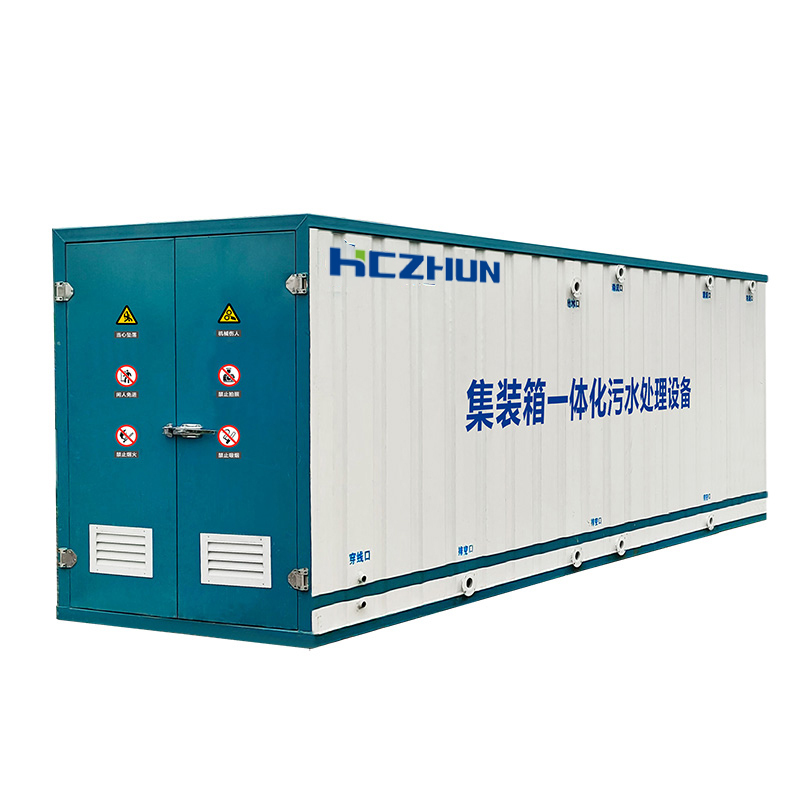
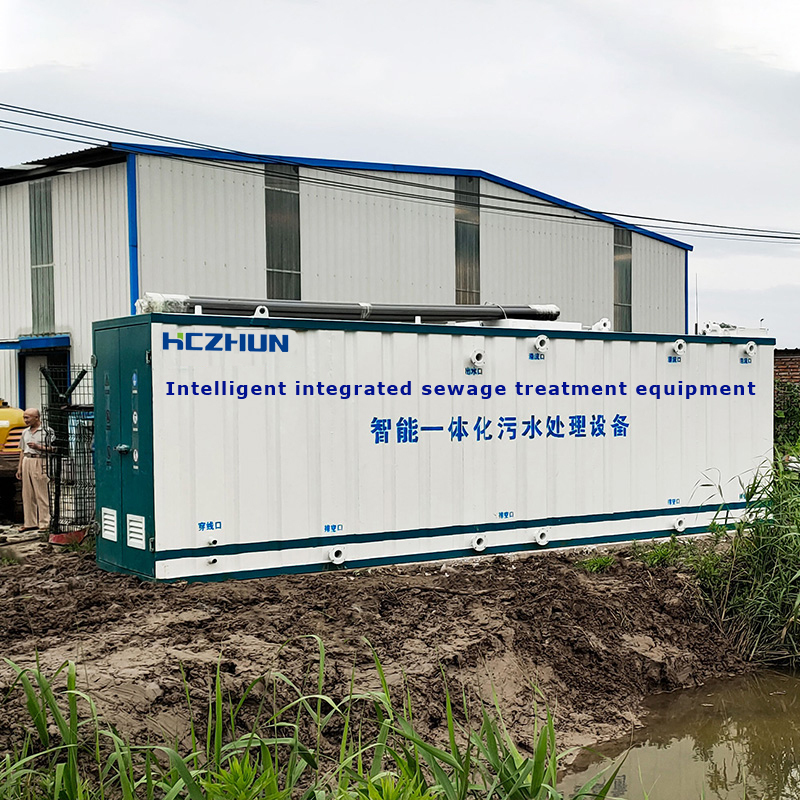
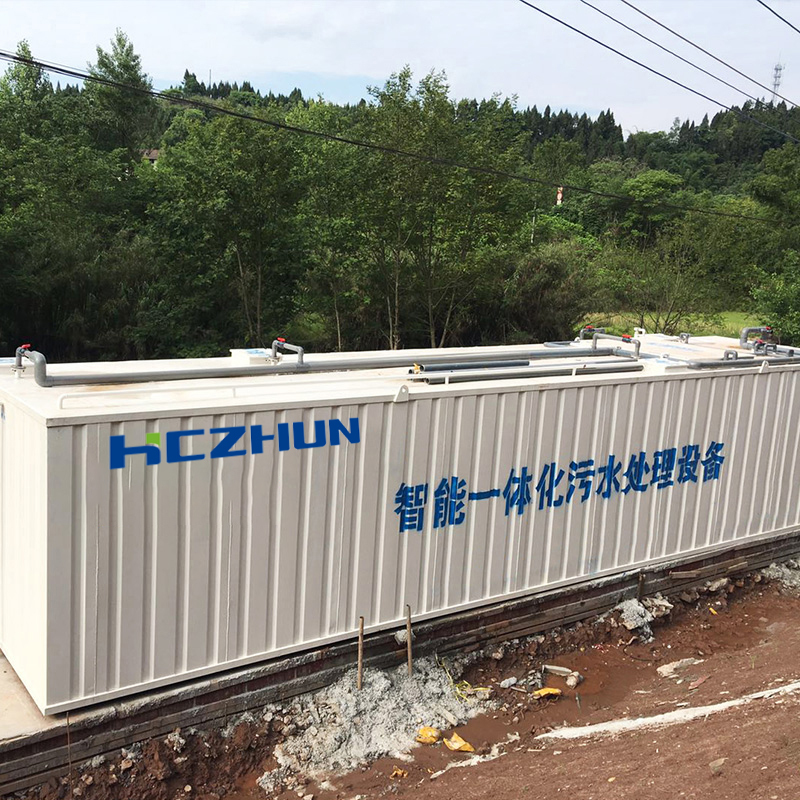
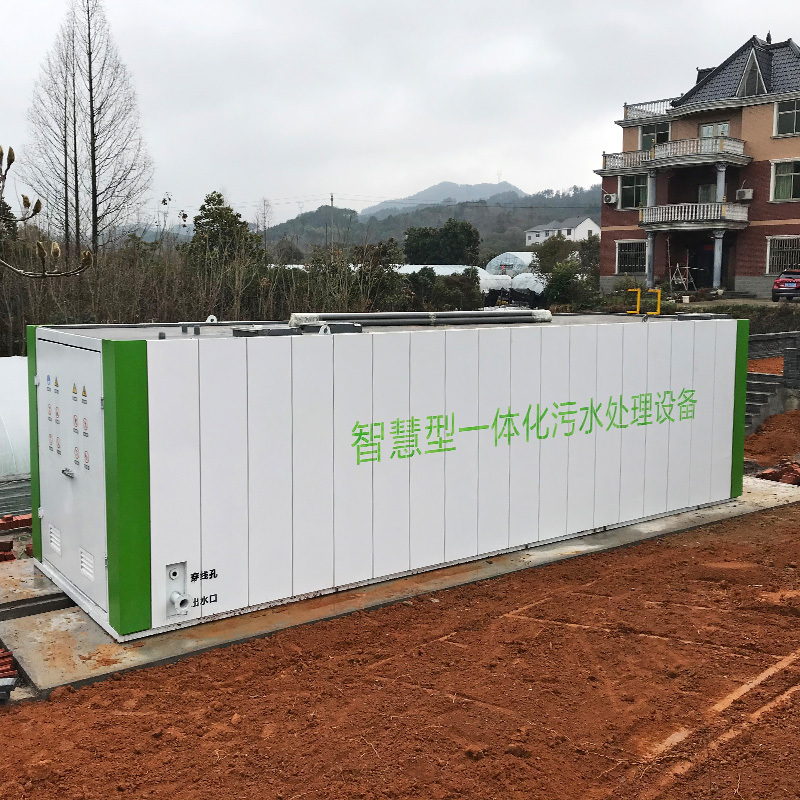
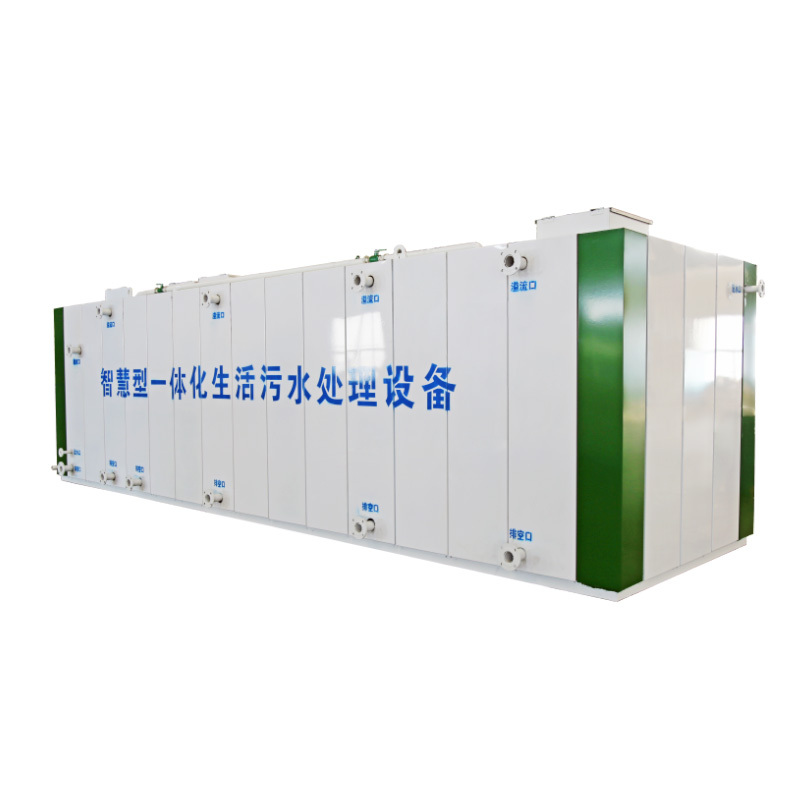
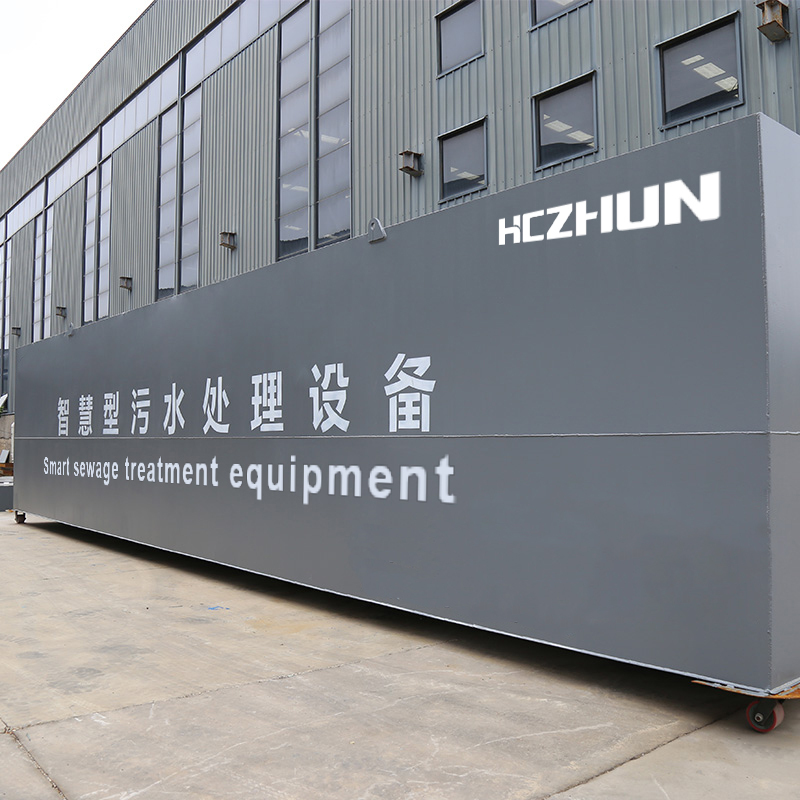
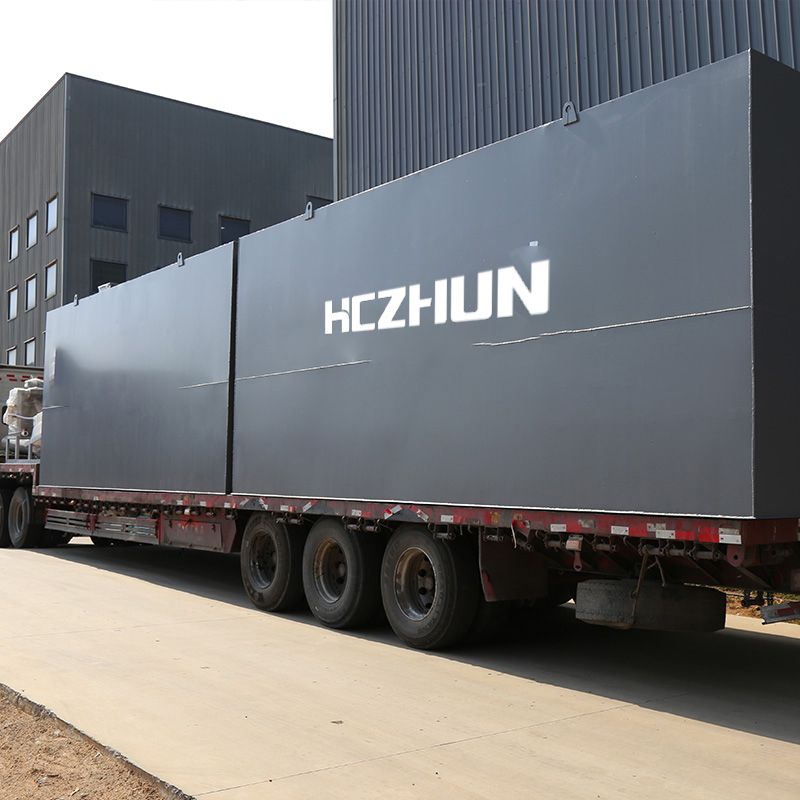
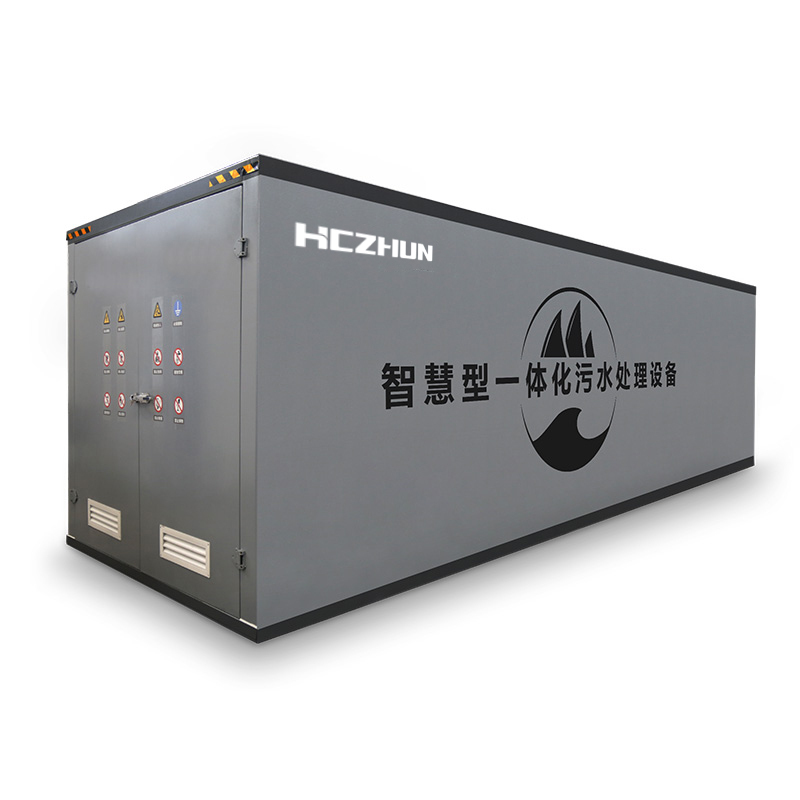
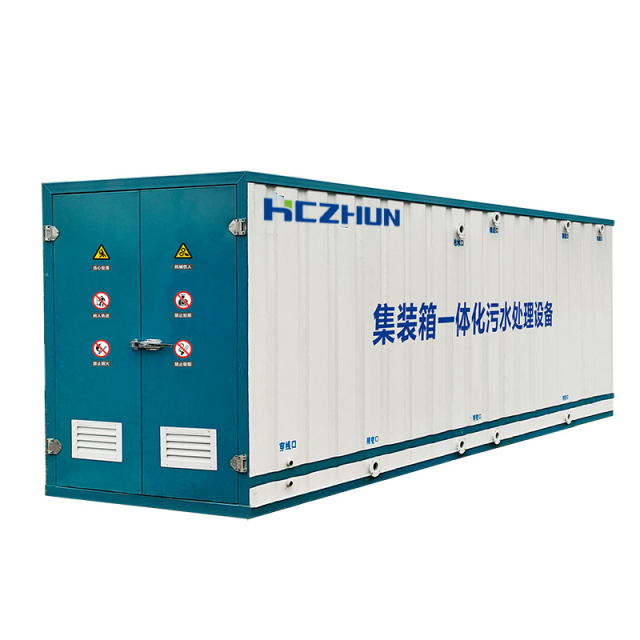
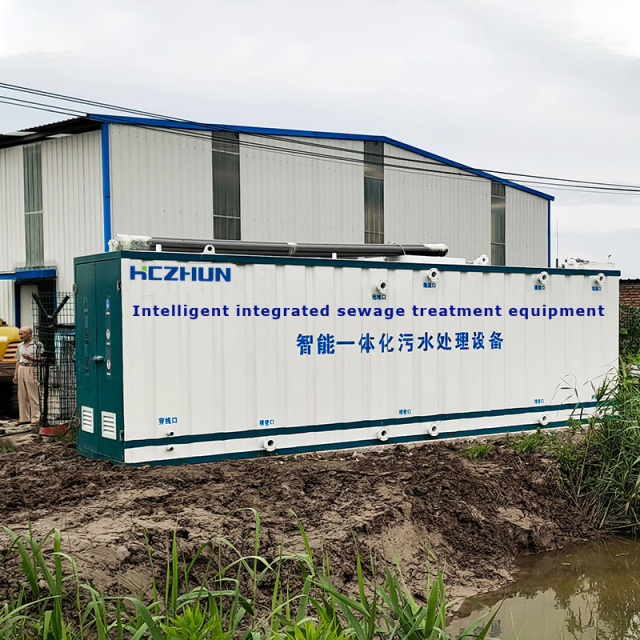
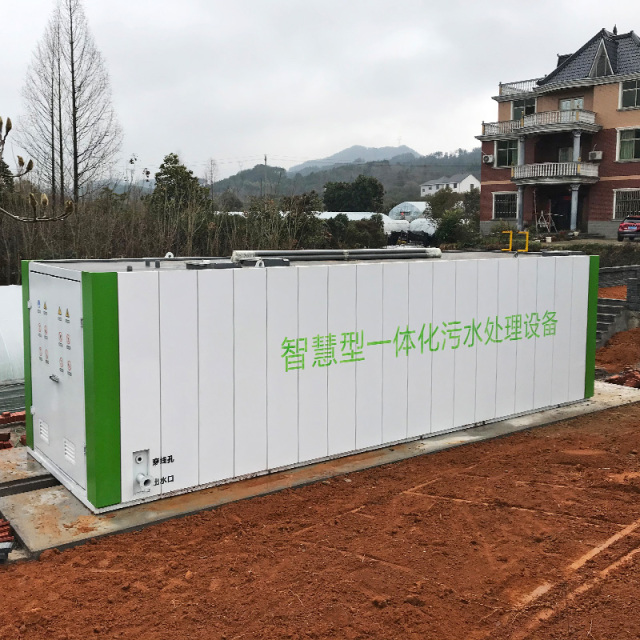
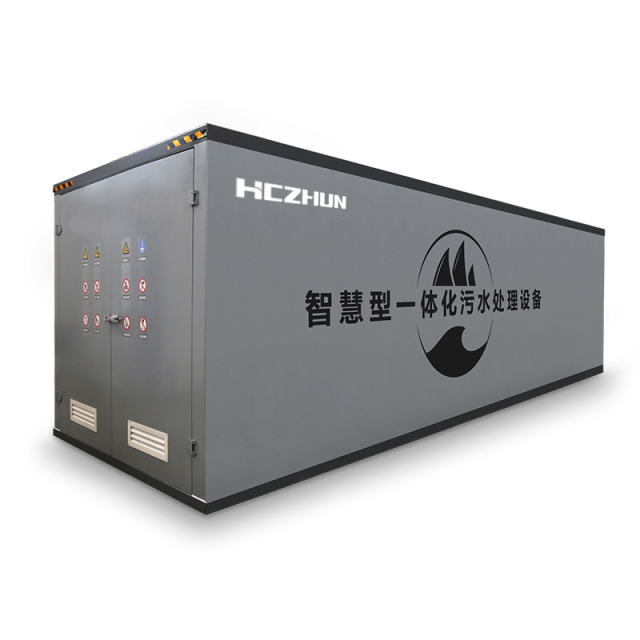
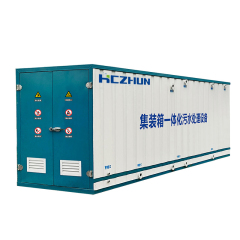
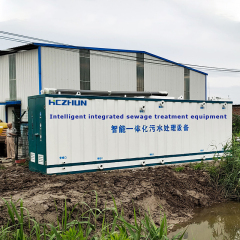
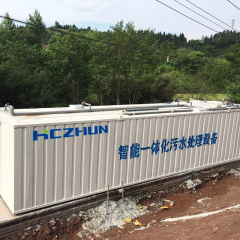
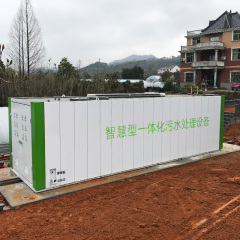
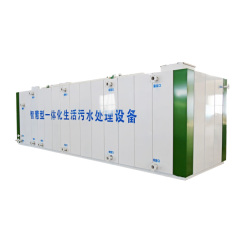
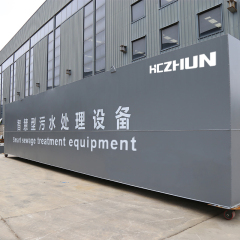
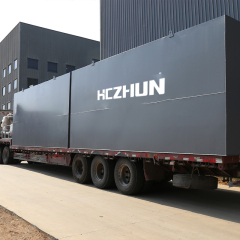
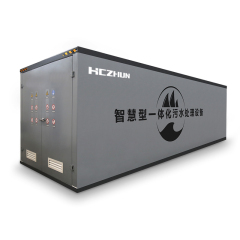
The photographs on this product are of finished units rather than renders: a long rectangular body built from white corrugated side panels, with teal hinged access doors running along its length. Panel construction is what lets the tank leave the works as a sealed enclosure and be buried without a separate concrete structure built around it. Roof pipework and side connection ports are visible in the same shots. Every containerized WWTP we ship carries the same warning labelling around the electrical and access areas, and lifting points are built into the body so the unit can be craned into the excavation instead of dragged into place. The installed shots show a package sewage treatment plant set outdoors with the ground around it already reinstated — the surface is back in use for the site while the process runs underneath it. Finish, door layout, port positions and roof pipework are set per model and per project connection drawing, so read the photographs as a guide to construction and layout rather than as a dimensional drawing. We issue the drawing for your exact configuration before fabrication starts.
Controls, Operation and Maintenance
- One automatic control panel.
- A fully automatic electrical control system runs the treatment process and raises an equipment fault alarm, so day-to-day operation is a matter of reading indications rather than adjusting valves by hand.
- Access through the body.
- Hinged doors along the length of the unit give reach to the carrier, the air distribution and the internal fittings, so inspection does not mean lifting the top of a buried tank.
- Odour handled in two ways.
- Buried units use conventional high-altitude exhaust, and the design also includes soil deodorisation measures, so the ground above the plant does not become a smell problem for the neighbours.
- Capacity can be staged.
- A modular wastewater treatment plant can be supplied in two or three groups on the larger models, so a site built out in phases can add treatment capacity in step with occupancy instead of paying for all of it up front.
- Built for buried duty.
- Double-wall body construction gives the enclosure high compressive strength and a long service life under the backfill load, so it stands in the ground without a concrete surround.
- That is the build standard we hold to as wastewater treatment equipment manufacturers, because once the plant is buried nobody can add strength to it later.
- Quiet on the surface.
- With the unit set and the ground reinstated there is no plant building, no exposed tank and no machinery visible on a residential or hospitality site — the treatment happens below grade and the land above returns to normal use.
- The numbers stay with the plant.
- The duty sheet, control settings and as-built drawing are handed over with the unit, so the next engineer to service it starts from the same figures the plant was sized on.
Specifications: Single-Unit Models, 5–150 m³/d
| Model | Capacity, dimensions, weights, power, running cost, cable and footprint |
|---|
| WSZ-0.25 | 5 m³/d; 2500 × 1000 × 1500 mm; 0.97 t equipment, 0.72 t operating; 3.84 kW installed, 2.72 kW running; 3.2 RMB per tonne, 16.01 RMB per day; 1.5 mm² cable; 19 m² footprint |
| WSZ-0.5 | 10 m³/d; 2500 × 1500 × 2000 mm; 1.65 t equipment, 9.15 t operating; 3.84 kW installed, 2.72 kW running; 1.6 RMB per tonne, 16.01 RMB per day; 1.5 mm² cable; 21 m² footprint |
| WSZ-1 | 20 m³/d; 5000 × 1500 × 2000 mm; 2.5 t equipment, 17.5 t operating; 4.6 kW installed, 3.1 kW running; 0.92 RMB per tonne, 18.47 RMB per day; 2.5 mm² cable; 26 m² footprint |
| WSZ-1.25 | 30 m³/d; 5000 × 2000 × 2000 mm; 2.9 t equipment, 21.7 t operating; 6.1 kW installed, 3.85 kW running; 0.78 RMB per tonne, 23.33 RMB per day; 2.5 mm² cable; 26 m² footprint |
| WSZ-1.67 | 40 m³/d; 6500 × 2000 × 2000 mm; 4.36 t equipment, 30.36 t operating; 6.1 kW installed, 3.85 kW running; 0.68 RMB per tonne, 27.22 RMB per day; 2.5 mm² cable; 31 m² footprint |
| WSZ-2 | 50 m³/d; 6500 × 2000 × 2500 mm; 5.07 t equipment, 37.57 t operating; 6.1 kW installed, 3.85 kW running; 0.54 RMB per tonne, 27.22 RMB per day; 2.5 mm² cable; 34 m² footprint |
| WSZ-2.5 | 60 m³/d; 7500 × 2000 × 2500 mm; 5.58 t equipment, 43.27 t operating; 7.5 kW installed, 4.55 kW running; 0.54 RMB per tonne, 32.51 RMB per day; 4 mm² cable; 36 m² footprint |
| WSZ-3 | 70 m³/d; 7000 × 2500 × 2500 mm; 6.31 t equipment, 51.31 t operating; 7.5 kW installed, 4.55 kW running; 0.46 RMB per tonne, 32.51 RMB per day; 4 mm² cable; 41 m² footprint |
| WSZ-3.5 | 80 m³/d; 8000 × 2500 × 2500 mm; 6.88 t equipment, 57.5 t operating; 9.1 kW installed, 5.35 kW running; 0.48 RMB per tonne, 38.56 RMB per day; 4 mm² cable; 45 m² footprint |
| WSZ-4 | 100 m³/d; 10000 × 2500 × 2500 mm; 8.3 t equipment, 72.98 t operating; 9.1 kW installed, 5.35 kW running; 0.44 RMB per tonne, 44.06 RMB per day; 4 mm² cable; 52 m² footprint |
| WSZ-5 | 120 m³/d; 11500 × 2500 × 2700 mm; 9.65 t equipment, 85.59 t operating; 14.85 kW installed, 8.6 kW running; 0.62 RMB per tonne, 74.3 RMB per day; 6 mm² cable; 60 m² footprint |
| WSZ-6 | 150 m³/d; 12000 × 3000 × 2700 mm; 11.22 t equipment, 108.42 t operating; 14.85 kW installed, 8.6 kW running; 0.5 RMB per tonne, 74.3 RMB per day; 6 mm² cable; 72 m² footprint |
Specifications: Multi-Train Models, 170–500 m³/d
| Model | Capacity, dimensions, weights, power, running cost, cable and footprint |
|---|
| WSZ-7 | 170 m³/d; 16000 × 2500 × 2700 mm, two groups; 12.26 t equipment, 121.61 t operating; 14.85 kW installed, 8.6 kW running; 0.44 RMB per tonne, 74.3 RMB per day; 6 mm² cable; 77 m² footprint |
| WSZ-8 | 200 m³/d; 20000 × 2500 × 2500 mm, two groups; 15.53 t equipment, 142.09 t operating; 15.55 kW installed, 9.3 kW running; 0.41 RMB per tonne, 82.37 RMB per day; 6 mm² cable; 91 m² footprint |
| WSZ-10 | 250 m³/d; 24000 × 2500 × 2700 mm, two groups; 17.3 t equipment, 175.25 t operating; 21.8 kW installed, 12.8 kW running; 0.43 RMB per tonne, 108.29 RMB per day; 10 mm² cable; 110 m² footprint |
| WSZ-12.5 | 300 m³/d; 24000 × 3000 × 2700 mm, two groups; 20.05 t equipment, 210.4 t operating; 21.8 kW installed, 12.8 kW running; 0.36 RMB per tonne, 108.29 RMB per day; 10 mm² cable; 127 m² footprint |
| WSZ-15 | 360 m³/d; 34500 × 2500 × 2700 mm, three groups; 25.11 t equipment, 251.91 t operating; 30.9 kW installed, 17.7 kW running; 0.41 RMB per tonne, 146.59 RMB per day; 10 mm² cable; 145 m² footprint |
| WSZ-17 | 400 m³/d; 37500 × 2500 × 2700 mm, three groups; 27.24 t equipment, 278.34 t operating; 30.9 kW installed, 17.7 kW running; 0.37 RMB per tonne, 146.59 RMB per day; 10 mm² cable; 159 m² footprint |
| WSZ-20 | 500 m³/d; 39000 × 3000 × 2700 mm, three groups; 33.71 t equipment, 349.61 t operating; 30.9 kW installed, 17.7 kW running; 0.29 RMB per tonne, 146.59 RMB per day; 10 mm² cable; 193 m² footprint |
Ordering and Project Delivery
- Send the duty point.
- Daily flow in m³/d, influent type — domestic, or industrial organic wastewater of a similar character — the discharge standard you must meet and the plot available.
- That is what selects the model from the tables above.
- Fix the configuration.
- Buried arrangement, connection positions, cable entry, control panel location and any reclaimed water reuse equipment are agreed on a project drawing before fabrication begins.
- Take the specification sheet and drawings.
- The model tables on this product can be issued as a downloadable specification sheet together with the dimensional drawing for your configuration, so your consulting engineer, installer and lifting contractor all work from the same document.
- Confirm the commercial terms with your sales contact.
- Price, payment schedule, lead time, packing and shipping are quoted per project and confirmed in writing, because they depend on the model, the destination and the scope of supply — ask for the current position rather than assuming a standing term.
- Plan the site works against delivery.
- A package sewage treatment plant at this scale arrives as one complete body, or as two or three groups above 150 m³/d, so the excavation, the base and the lifting arrangement need to be ready when it lands.
- Commission with us.
- Installation and commissioning guidance, operator handover and the first performance checks are arranged as part of the project — working with sewage treatment plant suppliers who stay through that stage is what turns a delivered tank into a plant that meets its discharge limit.
Site Preparation and Installation
- Confirm the duty point and the ground.
- Send us the daily flow, the influent character, the discharge standard you have to meet and the plot available — those four numbers are what a sewage treatment plant supplier sizes from, and they also fix the buried arrangement against your site drawing.
- Prepare the excavation and the base.
- The unit goes into an excavation sized to its external dimensions with working room on all sides, and the base and backfill are built to the drawing issued for the model.
- For a containerized WWTP that base is what carries the operating weight, not the tank body.
- Set the unit and make the connections.
- Inlet, outlet and cable-entry ports are fixed, labelled points on the outside of the body, so pipework and conduit are brought to them instead of being routed through a tank wall on site.
- On the larger capacities the plant ships in two or three groups and is joined before backfill.
- Wire the controls.
- Cable cross-section is specified per model in the tables on this product; the control panel, the alarm circuit and any monitoring link are terminated and checked while everything is still accessible.
- Test before you cover it.
- Fill, pressure-test the pipework, and run the electrical and alarm checks with the unit still open to access — a modular wastewater treatment plant is far easier to inspect at this stage than after the surface has been reinstated.
- Backfill and reinstate the surface.
- With the checks signed off, backfill follows the sequence on the drawing, and the ground above is returned to grass, paving or whatever the site plan calls for.
- Commission and grow the biofilm.
- The plant starts on a reduced flow while the carrier biofilm establishes; our engineers support commissioning, the first effluent tests and the operator handover.
Technical Support & Model Matching
Send us your duty point, available utilities and site constraints, and our engineers will match a model from our range and confirm the configuration with you before anything is built — including custom designs where the project calls for it. That support continues after delivery: our technical team assists with installation and commissioning guidance, operator handover, fault finding and spare-part replacement, and we provide the drawings and specifications your project team needs. Share your process details and we will come back with a recommended model and a clear technical proposal.
FAQ
What kind of wastewater can this plant treat?
Domestic sewage from residential communities including villa communities, high-end hotels, hospitals, comprehensive office buildings and other public buildings, plus industrial organic wastewater of a similar character. The duty is set by the character of the sewage rather than by the industry name, so describe its strength, how much it varies through the week and any trade discharge mixed into it, and we will confirm whether this platform suits the application.
How do I choose the right capacity?
Start from the daily flow in m³/d and work outward from there: the range covers 5 to 500 m³/d, with single bodies up to 150 m³/d and larger duties supplied in two or three groups. Peak flow, influent strength and the discharge limit you must meet all push the selection above the average figure, so send the peak as well as the daily total. Above 150 m³/d the plant is configured as a modular wastewater treatment plant so the groups can be staged with the build programme.
What effluent quality will it produce?
The units are built to treat to national discharge standards, with BOD5, COD and ammonia nitrogen removal carried out in the same tank. Final quality depends on influent strength, flow variation and the limit your project has to meet, so state that limit at the selection stage rather than after the drawing is issued. Where treated water is to be recovered for irrigation or flushing, reclaimed water reuse equipment is added to suit the requirement.
Does the plant need a full-time operator?
As a rule, no. The package sewage treatment plant runs from a fully automatic electrical control panel with an equipment fault alarm, and attendance is limited to periodic maintenance and the scheduled desludge visit rather than daily supervision. A community, hotel or public building without a technical department on site is the normal case for this format.
How often does the tank need desludging?
Roughly every 90 days or longer. Because the biofilm operates in the self-oxidation phase and the filler volume load is kept low, surplus sludge accumulates slowly. Removal is by suction tanker, or by dewatering to sludge cake for transport where that is easier to arrange on site, and the visit is scheduled rather than reactive.
Is the plant delivered as one piece or in sections?
Both, depending on size. Units up to 150 m³/d ship as one complete body; above that the plant travels in two or three groups that are joined on site, which is how 500 m³/d is delivered into a 193 m² footprint. Grouped delivery of this kind is how wastewater treatment equipment manufacturers keep large capacities within normal lifting and transport limits, and the joint positions are shown on the model drawing.