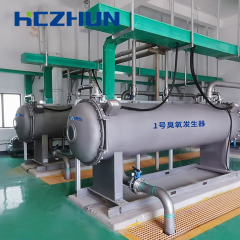


Ozone demand at a treatment plant rarely sits still: organics, colour and odour load move with the raw water, and a unit that cannot follow that movement either overdoses or loses the duty. The HMS large scale ozone generator is built for that working profile, with output adjustment and cooling arranged so the unit can stay on duty through the shift. Across the range, ozone production runs from 4 to 20 kg/h, so one platform covers pilot-scale expansion, municipal additions and larger industrial oxidation duties. Every listed model uses an oxygen feed source and water cooling, with the generator and power supply cabinet supplied as separate footprints for plant-room planning. An industrial ozone generator earns its place where disinfection, oxidation and odour control happen in one process train. HMS units are typically specified for municipal water and wastewater, industrial effluent, process-water oxidation and odour-control points where stable output matters more than a long list of add-ons. Projects often start with an ozone generator for water treatment because the alternative — delivered chemicals, storage and handling — adds a supply chain to the plant. On-site ozone production uses oxygen feed and electricity at the point of use, which simplifies chemical storage and lets the treatment train respond to demand as it changes. That matters when the generator has to fit an existing plant room and interface with upstream oxygen and downstream ozone contacting equipment.


| Protection or design feature | What it does |
| Power protection | Limits the effect of abnormal electrical conditions on the supply and transformer. |
| Electrical breakdown protection | Detects and contains breakdown events in the high-voltage discharge circuit. |
| Chamber media protection | Reduces the risk of damage to the dielectric and chamber components if a discharge fault occurs. |
| Dedicated monitoring circuits | Separate circuits watch the operating state and support fault detection. |
| Separate power cabinet | Keeps high-voltage equipment in its own enclosure with its own service access. |
| Water cooling circuit | Removes discharge heat from the ozone generator so the chamber does not run at temperatures that accelerate wear. |
| Model-matched transformer and chamber | The electrical supply and ozone chamber are selected as a pair, reducing mismatch-related stress. |
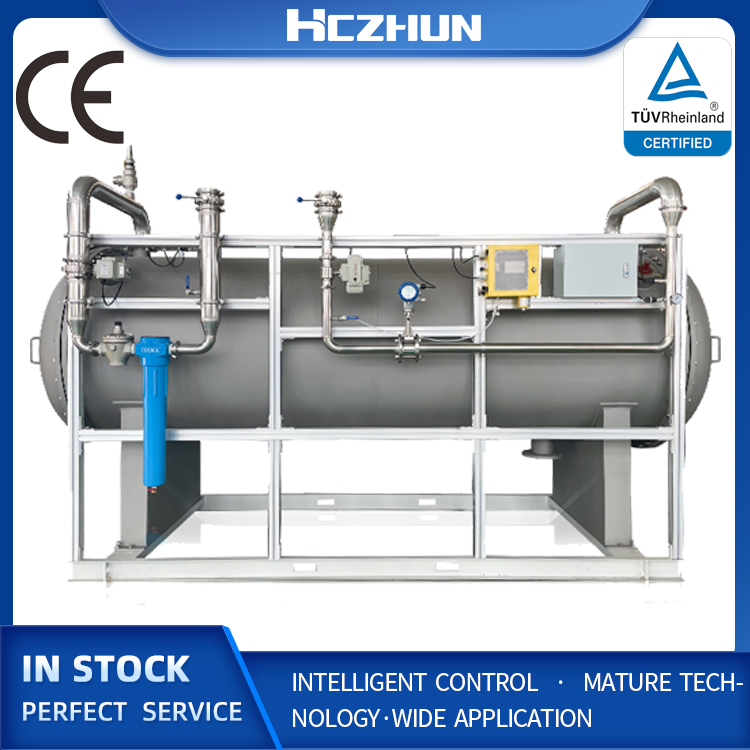
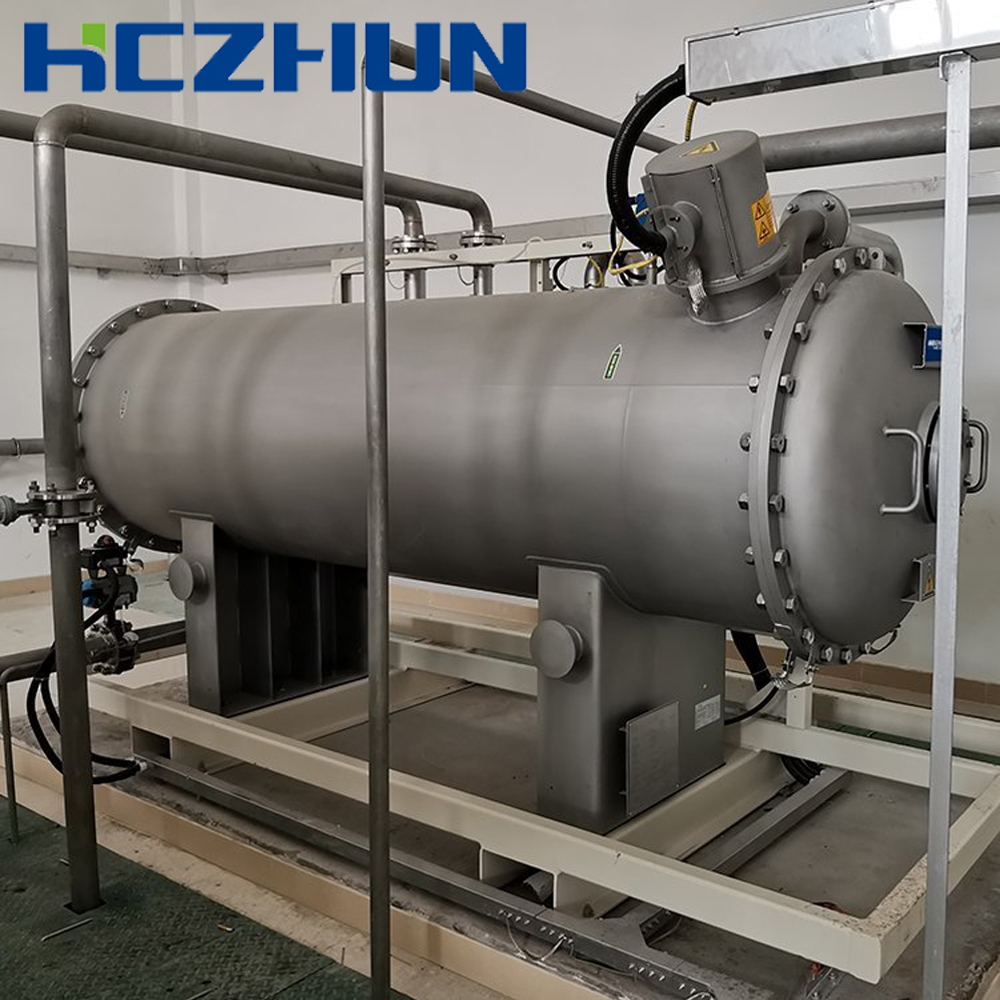
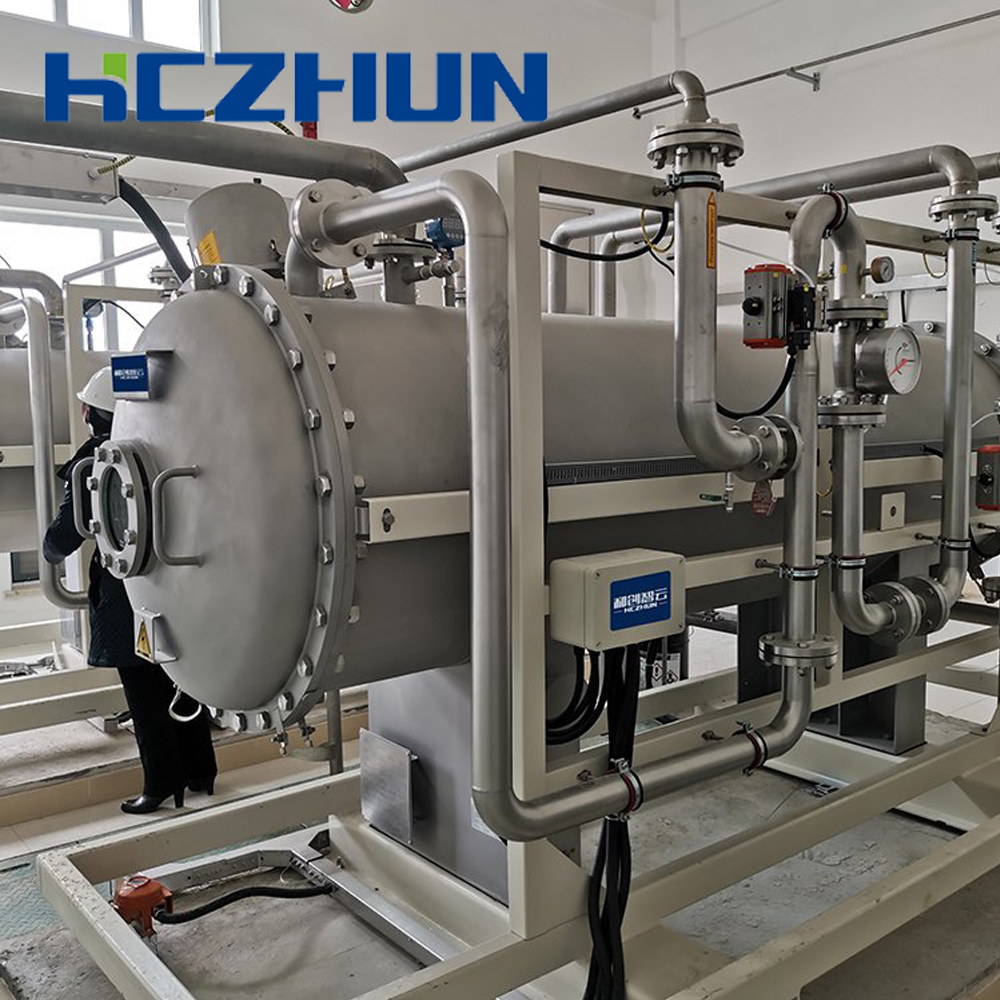
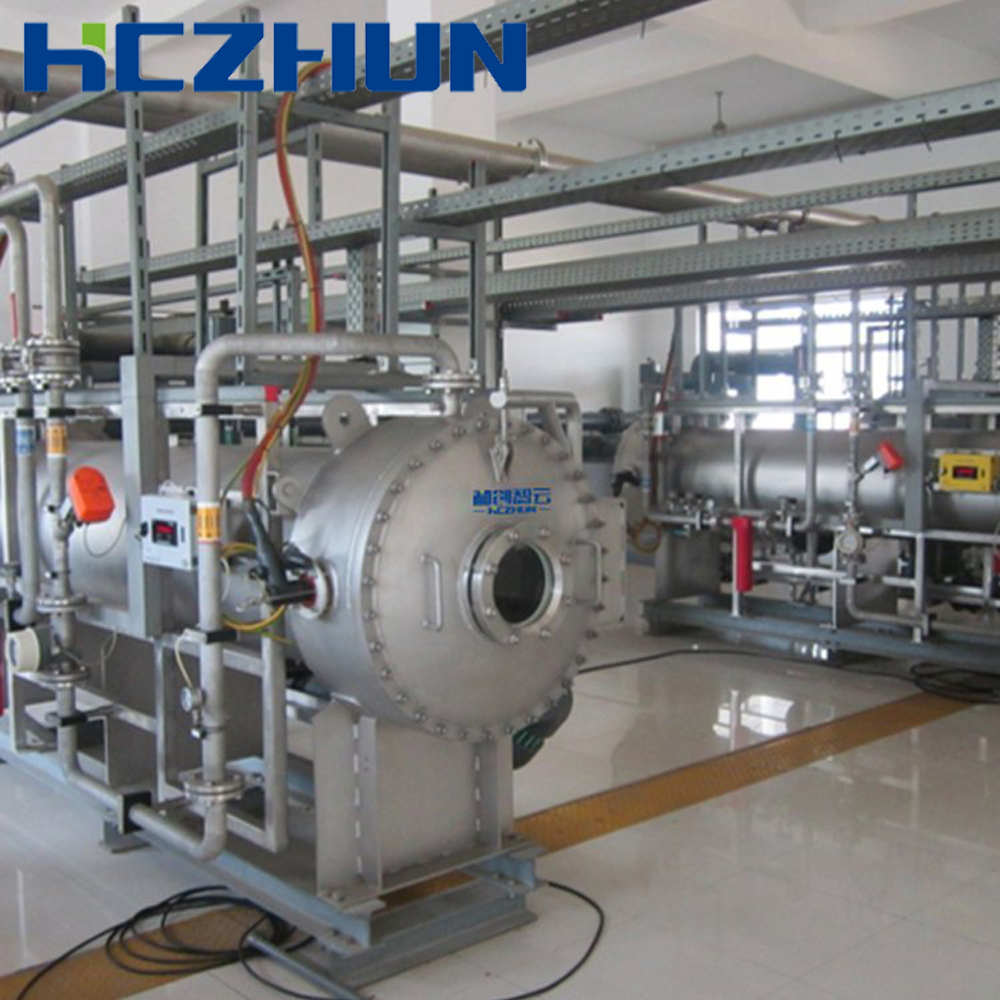
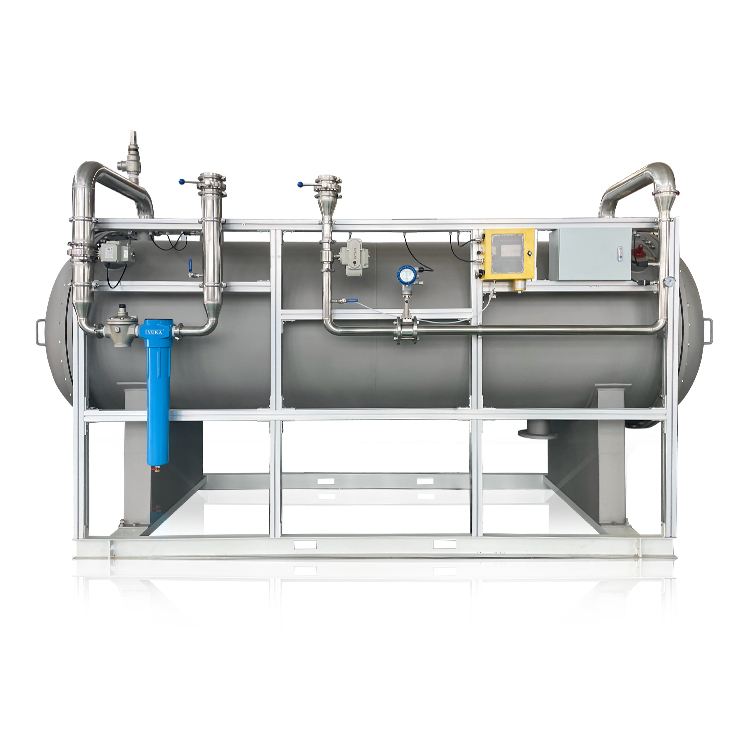
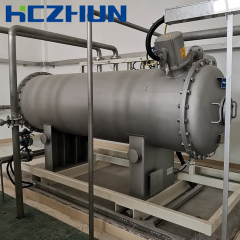
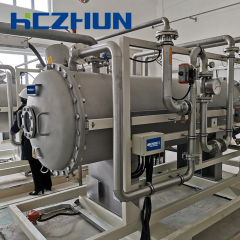
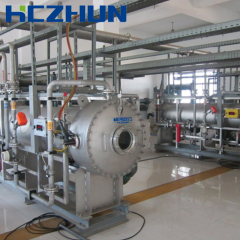
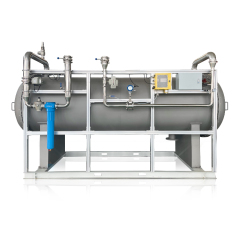
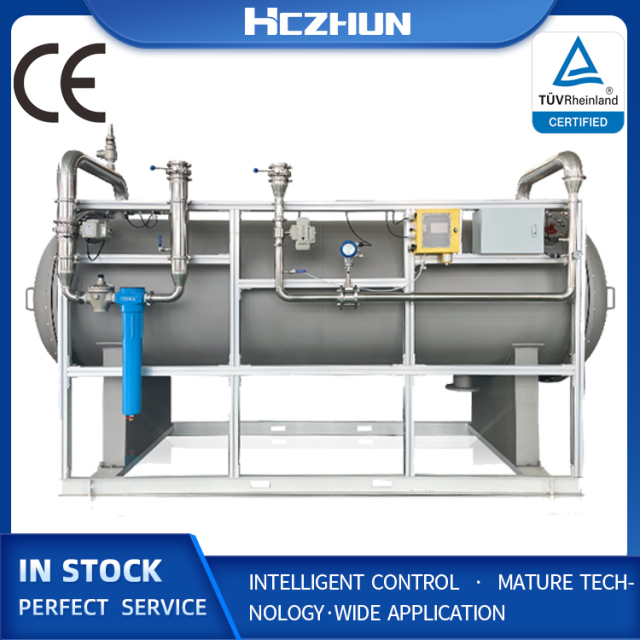
The HMS ozone generator is built as a horizontal cylindrical reactor on a steel skid, with the main piping, valves and a control box mounted as one assembly. That arrangement is intended for a plant room where the generator is set down, connected and commissioned rather than built up from loose components on site.
Flanged end ports give the gas and cooling connections a defined interface. The end cap is bolted, so the chamber can be opened for inspection without cutting pipework.
Valves, gauges and a filter housing sit on the skid where an operator can see them during a walk-round. The control box is mounted on the unit, with a separate power supply cabinet placed nearby.
The horizontal layout keeps the vessel accessible from floor level, and the skid frame gives a single base for fixing. The cabinet footprint is listed separately, so the electrical area can be planned at the same time as the vessel.
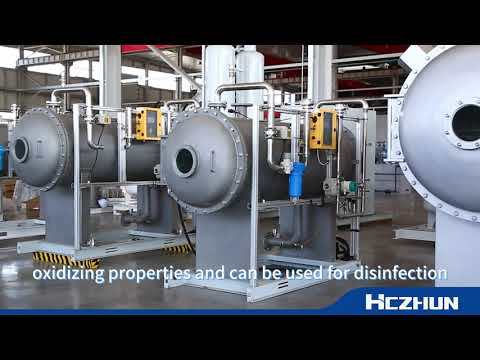
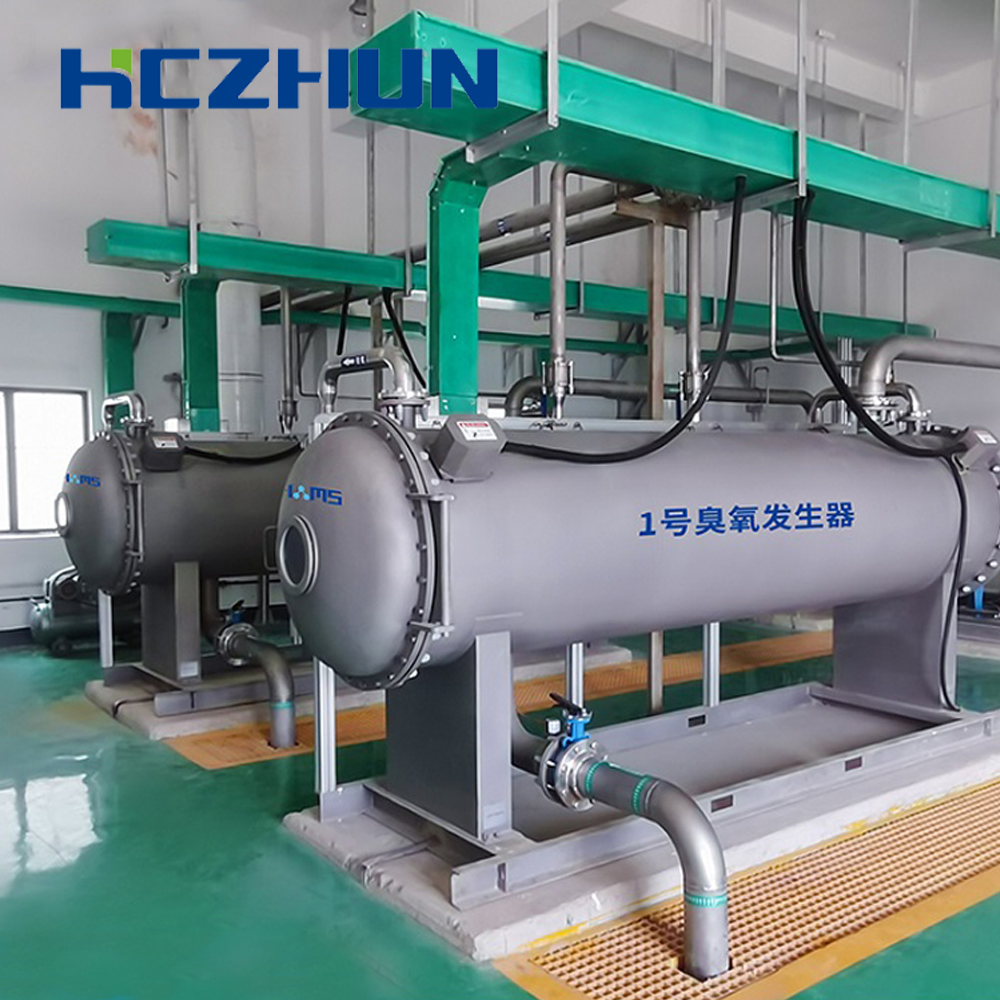
For multi-unit installations, the same frame and connection pattern allow units to be set in a row with service access between them. Spacing should be agreed against the actual room and cable routing, not assumed from the outline dimensions alone, and as an industrial water treatment equipment supplier we can review the layout with your project team.
A large ozone installation succeeds or fails on the interfaces: gas in, cooling water through, power in, ozone out, and a control point the plant can actually use. The HMS platform is arranged around those interfaces, with the generator vessel and power supply cabinet supplied as two coordinated units rather than one crowded box. As an ozone generator manufacturer, we keep the high-voltage power supply in its own cabinet with its own footprint. That separation gives maintenance staff room to work and keeps heat and electrical equipment out of the same compartment as the gas path. For the operator, the practical result is a unit that can be turned down when the process load falls and brought back up without a long stabilisation period. Output adjustment is part of the normal operating routine, not an emergency measure. For the maintenance team, the layout keeps the high-voltage cabinet separate from the gas path and groups the valves and instruments where they can be reached. Service access is part of the mechanical design, not an afterthought. For the project engineer, the model table gives ozone output, power, cooling-water and gas connections, weights and two footprints in one place. That is enough to reserve space, size the utilities and compare models before the detailed design is fixed.
Different sites bring different cooling water, feed gas and load profiles, so a fixed-configuration generator often ends up oversized at low demand or short of output at peak. The HMS platform is arranged to be configured around the project rather than forced into one standard setting.
Several heat exchange module options are available. The choice is matched to the cooling water available on site and the way the plant intends to run the unit, so the generator is not tied to a single utility arrangement.
Ozone output can be adjusted using power pulse density modulation. The operator can trim production as the process demand changes instead of switching the unit on and off in large steps.
The listed performance is based on an oxygen feed source. Where the feed gas or site conditions differ, the model and operating point should be reviewed with our engineers before the unit is fixed.
The separate generator and power supply cabinet also give layout flexibility: the vessel can sit close to the ozone injection point while the electrical cabinet is placed where maintenance access and cable routing are better.
For plants that expect future expansion, the model table makes it possible to reserve space and utilities for a larger frame without changing the whole plant-room concept.
| Model or item | Specifications |
| Feed gas | Oxygen source for the listed performance |
| HMS-4K | 4 kg/h ozone; 32 kW / 380 V; cooling water DN 40; gas inlet DN 32; generator 820 kg; cabinet 780 kg; generator 2.5 × 1.0 × 1.8 m; cabinet 2.0 × 0.8 × 2.1 m |
| HMS-5K | 5 kg/h ozone; 40 kW / 380 V; cooling water DN 50; gas inlet DN 40; generator 980 kg; cabinet 780 kg; generator 2.5 × 1.0 × 1.8 m; cabinet 2.0 × 0.8 × 2.1 m |
| HMS-6K | 6 kg/h ozone; 48 kW / 380 V; cooling water DN 65; gas inlet DN 40; generator 1,200 kg; cabinet 780 kg; generator 2.5 × 1.1 × 1.9 m; cabinet 2.0 × 0.9 × 2.12 m |
| HMS-8K | 8 kg/h ozone; 64 kW / 380 V; cooling water DN 65; gas inlet DN 40; generator 1,300 kg; cabinet 1,000 kg; generator 2.5 × 1.1 × 2.0 m; cabinet 2.0 × 0.9 × 2.12 m |
| HMS-10K | 10 kg/h ozone; 80 kW / 380 V; cooling water DN 80; gas inlet DN 50; generator 1,500 kg; cabinet 1,400 kg; generator 2.6 × 1.2 × 2.0 m; cabinet 3.0 × 0.9 × 2.12 m |
| HMS-12K | 12 kg/h ozone; 96 kW / 380 V; cooling water DN 80; gas inlet DN 65; generator 1,700 kg; cabinet 1,600 kg; generator 2.6 × 1.3 × 2.1 m; cabinet 3.2 × 0.9 × 2.12 m |
| HMS-15K | 15 kg/h ozone; 120 kW / 380 V; cooling water DN 100; gas inlet DN 65; generator 1,900 kg; cabinet 1,900 kg; generator 2.6 × 1.4 × 2.2 m; cabinet 4.0 × 1.1 × 2.12 m |
| HMS-20K | 20 kg/h ozone; 160 kW / 380 V; cooling water DN 100; gas inlet DN 65; generator 2,500 kg; cabinet 2,200 kg; generator 2.7 × 1.5 × 2.3 m; cabinet 4.0 × 1.1 × 2.12 m |
The first step is to fix the duty: ozone output in kg/h, feed gas source, cooling-water conditions, power supply and the space available for the generator and cabinet. Send those details with the application and our engineers will confirm which HMS model fits.
As an ozone generator manufacturer, we issue the quotation against a defined configuration rather than a bare model number. The quotation should state the selected model, cabinet arrangement, connection sizes, documentation set and any project-specific items agreed with your team.
The HMS specification sheet can be downloaded for the full model table, and a project-specific version can be issued with the quotation when the duty falls outside the standard range or the site data differs.
As an industrial water treatment equipment supplier, we also confirm what sits around the generator: upstream oxygen supply, downstream injection or contacting, cooling-water circuit and the control signals the plant will use. Those interfaces are checked before shipment because they decide how quickly the unit can be commissioned.
Commercial terms — price, payment schedule, lead time, packing, shipping method and warranty — are confirmed in the quotation for the selected configuration. They depend on the model, destination and project schedule, so ask for the current terms with your enquiry.
Ask your sales contact about the documents your project requires, including drawings, connection schedules and certification documents where available for the selected configuration. Confirm the exact document list before order release.
Send us your duty point, available utilities and site constraints, and our engineers will match a model from our range and confirm the configuration with you before anything is built — including custom designs where the project calls for it. That support continues after delivery: our technical team assists with installation and commissioning guidance, operator handover, fault finding and spare-part replacement, and we provide the drawings and specifications your project team needs. Share your process details and we will come back with a recommended model and a clear technical proposal.